Garage Door Balancing: Smooth, Safe, and Reliable Operation
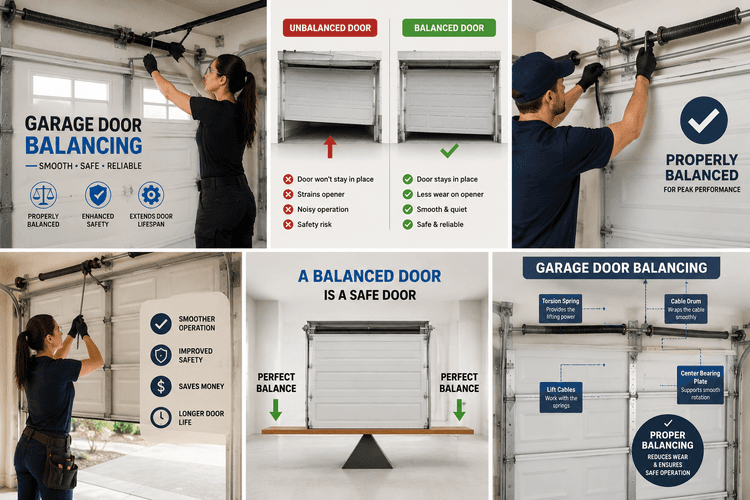
Garage door balance is one of the most overlooked maintenance items — and one of the most important. A properly balanced door should stay in place at any point when disconnected from the opener; if it falls, rises on its own, or feels heavy in one spot, the springs are no longer carrying their share of the door's weight, and the opener is doing work it isn't designed for.
How to Tell If Your Door Is Out of Balance
Pull the manual release cord and lift the door halfway by hand — it should stay put. If it slides down or shoots up, the door is out of balance. Other signs include an opener that strains or makes a labored sound, a door that closes unevenly, or springs that look stretched or uneven on either side.
Why Balance Matters
An unbalanced door forces the opener motor to compensate constantly, which shortens the opener's life and can strip gears well before it should fail. It's also a safety issue — an unbalanced door can drop unexpectedly during manual operation.
What Balancing Involves
- Measuring current spring tension against the door's actual weight
- Adjusting or replacing torsion springs to correct tension
- Re-testing at multiple points along the door's travel
- Confirming the opener's force settings afterward
We rebalance doors on their own as a standalone service, and we also check balance as part of every spring replacement and opener installation, since installing new springs without setting the correct tension defeats the purpose of replacing them.